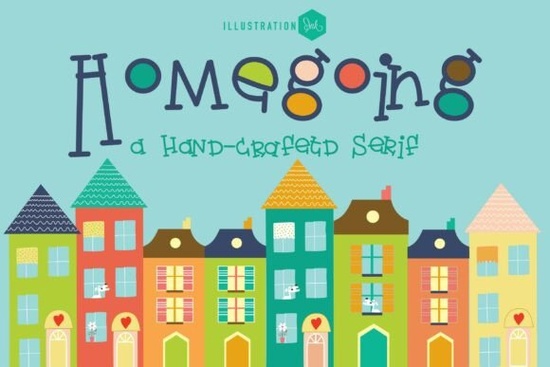
If you need a typeface that feels like a warm invitation rather than a loud advertisement, Homegoing Font delivers exactly that. Designed as a specialty display face, it blends mid-century storybook charm with clean, modern indie aesthetics. The letterforms are tall and slightly uneven, featuring mismatched geometric color blocks, chunky slab-serif bars, and little teapot-style lids on the rounded characters. For designers, print-on-demand sellers, and small business owners, this playful detail works well when you want your branding to feel approachable and handcrafted.
What makes this typeface stand out for branding and print projects?
Most decorative fonts rely on heavy outlines, but this one uses solid color fills and mixed-case styling to create visual rhythm without overwhelming the page. The uneven baselines and slab accents give it a handmade quality that reads clearly at larger sizes. You will often see this style used for boutique bakery logos, custom nursery wall art, community event posters, and independent real estate branding. When you are building a visual identity that needs to feel welcoming, a display face with built-in warmth saves you from adding extra illustrations. If you enjoy experimenting with vintage-inspired lettering, you might also want to browse other retro script and display options that share that same nostalgic energy.
How do you format and pair a highly decorative font without cluttering the design?
Playful typefaces work best when they have room to breathe. Because the geometric color fills and teapot handles already carry visual weight, reserve this font for headlines, short phrases, or logo marks. Keep body text in a clean sans-serif to balance the whimsy. When setting the letters, increase the tracking slightly so the mismatched fills do not collide. If you are designing for print-on-demand products like tote bags or kids’ room wallpaper, test the layout at actual size before exporting. Muted earth tones or soft pastels often match the storybook vibe more naturally than neon backgrounds. Designers who rotate through seasonal campaigns sometimes keep a folder of retro kids and display typefaces on hand to swap headlines quickly.
Which file formats and licensing details should you verify before using it commercially?
Before adding any decorative font to a client project or storefront, check the included file types and commercial license terms. Most modern display fonts ship with OTF and TTF files, which install smoothly on both Mac and Windows machines. If you plan to use the typeface in editable templates, make sure your design software supports embedded color layers. Always review the license for merchandise limits, especially if you are selling physical goods or digital templates. You can preview the full character set and licensing options for Homegoing Font directly on the marketplace page. If your workflow requires heavier lettering for contrast, you might explore street writing and display styles to create a bold secondary headline.
What is the simplest way to test this font before committing to a full campaign?
Start testing by typing out your actual brand name rather than using placeholder text. Decorative fonts often behave differently with specific letter combinations, and the mixed-case styling here means you will want to see how the capitals and lowercase forms interact. Print a quick proof on standard paper to check how the solid color fills translate to ink, especially if you are working with heat-transfer vinyl. For social media graphics, export a test image and view it on a phone screen. Small details like the teapot lids can disappear if the headline is scaled down too far. When you need a seasonal alternative with a similar playful structure, some creators keep holiday-themed display fonts in their library for quick swaps. You can also review layout examples on the dedicated Homegoing display page to see how other crafters structure their files.
Before you finalize your design, run through this quick checklist:
- Check spacing: Increase tracking slightly so the geometric fills do not overlap.
- Limit usage: Reserve the font for headlines, logos, or short callouts under six words.
- Pair wisely: Use a neutral sans-serif for paragraphs and fine print.
- Test print: Run a physical proof to verify how the solid blocks and slab serifs render on your chosen material.
- Verify license: Confirm commercial rights for your specific product type, especially for print-on-demand or client branding.
Save a styled mockup in your project folder, note the exact color codes that complement the fills, and you will have a repeatable template ready for your next launch.
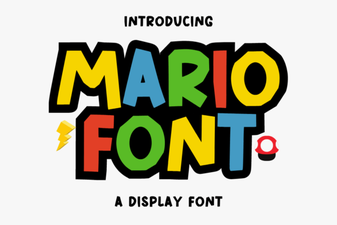 Custom Mario Font Design & Creative Projects
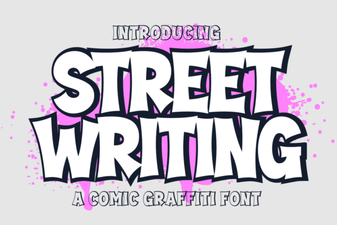 Urban Graffiti Fonts: Creative Design Ideas
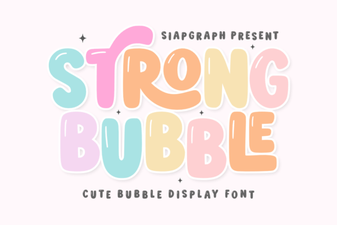 Free Bubble Fonts for Creative Projects
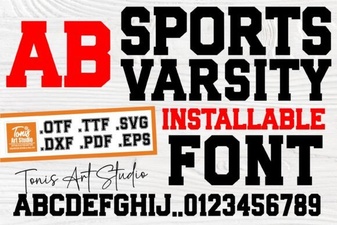 Varsity Font Designs for Sports and Graphics
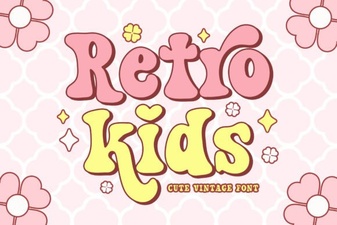 The Value of Classic Retro Fonts for Children's Designs
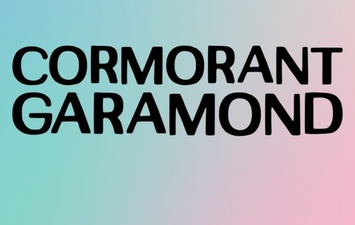 Cormorant Garamond: Elegant Design with Creative Flair