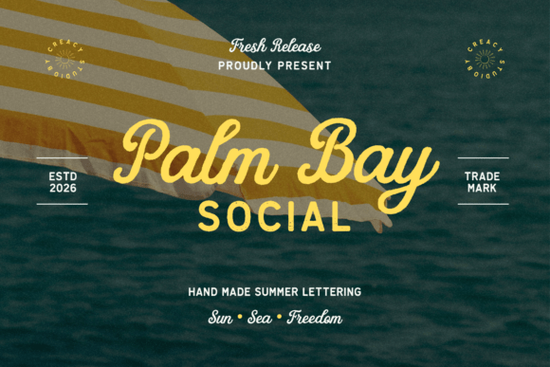
If you are looking for a typeface that captures a relaxed, sun-soaked vibe without feeling cliché, Palm Bay Social Font delivers exactly that. This duo pairs a smooth retro script with a lightly distressed sans serif, giving you the flexibility to mix elegant curves with grounded, vintage-style lettering. Designers, print-on-demand sellers, and small business owners often struggle to find fonts that feel both handcrafted and professional. This set bridges that gap by offering a balanced contrast that reads clearly on screens and prints cleanly on merchandise.
What makes this font duo work for summer and vintage projects?
The strength of this typeface lies in its intentional contrast. The script side carries fluid, looping strokes reminiscent of mid-century resort signage, while the sans serif brings a weathered, lived-in texture. When placed together, they create a clear visual hierarchy without competing for attention. This is especially useful when you need a headline that feels nostalgic but still requires a clean subheading. The distressed details are subtle enough to avoid looking grungy, which keeps your layouts polished across different mediums. If you typically reach for heavier lettering for seasonal campaigns, you might also want to explore a heavier script alternative when you need extra weight for bold storefront graphics or thick apparel prints.
Which design projects fit this style best?
This font duo shines when your goal is to evoke warmth, leisure, or a handcrafted feel. Here are the formats where it performs most consistently:
- Apparel and tote bags: The script works beautifully for short phrases, while the sans serif handles smaller brand details.
- Social media graphics: Clean spacing and readable curves make it easy to style quotes or seasonal promotions without clutter.
- Wedding and event stationery: The retro elegance pairs well with muted color palettes and simple line illustrations.
- Coastal branding: Think café menus, candle labels, or beach club merchandise that needs a relaxed identity.
When you are building out a broader seasonal collection, alternating between different duos keeps your shop looking fresh. For example, a playful coastal typeface might work better for highly energetic, surf-inspired items, while this option leans slightly more toward polished resort aesthetics.
How do you pair and use the two fonts effectively?
Working with a pre-matched duo removes the guesswork, but you still need to apply a few layout basics. Keep the script for short headlines or signature-style accents, and reserve the sans serif for body text, dates, or supporting details. Maintain generous line spacing so the distressed edges do not blur together when printed at smaller sizes. If you are designing for print-on-demand platforms, always test your artwork at actual scale before uploading. For creators who regularly produce handwritten-style content, keeping a reliable backup in your toolkit is a smart habit. A casual handwriting collection can cover daily planners and relaxed social templates when you need a more informal tone.
What should you check before using it for client or shop work?
Before adding any typeface to a commercial project, verify the license terms. Font creators typically specify whether the file covers personal use, small business sales, or extended merchandise runs. Check if web embedding or logo trademarking is included, since those rights often require a separate upgrade. Review the character set to confirm you have the punctuation, numbers, and multilingual glyphs your project demands. If you frequently design for family-oriented brands, you might find that a softer, family-friendly style matches those specific demographics better. Matching the mood of the typeface to the audience always improves customer response.
How do you get the most value from this download?
Start by installing both font files and testing them in your primary design software. Type out real phrases instead of placeholder text so you can see how the letters connect and where the texture lands. Create a quick style sheet that documents your preferred tracking, leading, and color combinations. Save a few template files with the hierarchy already set up, so future product listings only require a text swap. For makers who prefer a more nature-inspired aesthetic, a nature-inspired lettering set can complement your existing library without overlapping in style. Building a small, well-curated font collection is always more efficient than downloading dozens of files you rarely open.
Quick pre-launch checklist:
- Verify the commercial license matches your intended sales channel
- Test print at actual size to check distressed edge clarity
- Pair the script with the sans serif using a 2:1 size ratio for clear hierarchy
- Export a PNG and PDF sample to compare screen versus print rendering
- Save a master template with your chosen spacing and color palette
Keep this routine handy, and your next seasonal release will go from concept to live listing with fewer revisions and cleaner typography.
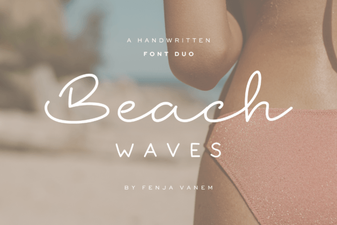 Beach Waves Duo Font for Typography Projects
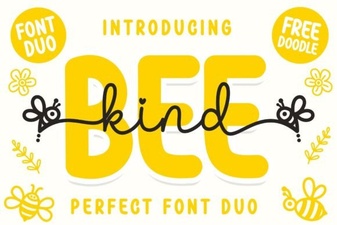 Bee Kind Duo Font: Perfect Pair for Creative Projects
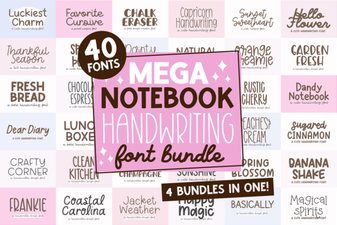 Digital Notebook Fonts for Handwriting & Creative Projects
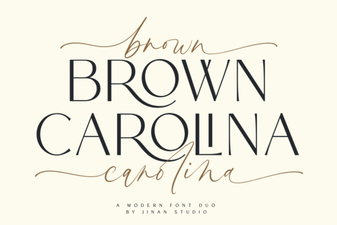 Brown Carolina Duo Font Design & Project Ideas
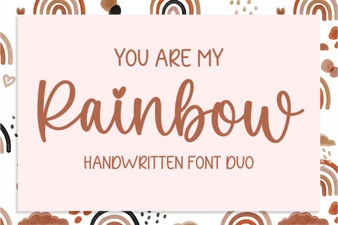 Fonts to Brighten Your Digital Projects
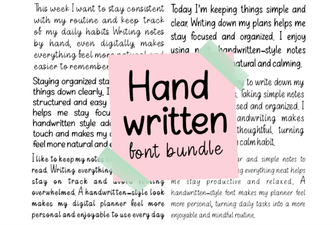 Handwritten Font Bundle for Creative Projects