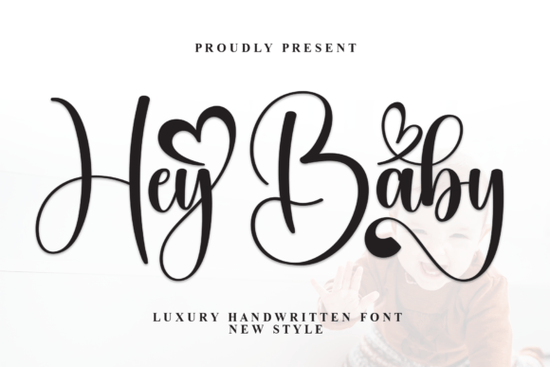
If you are a designer, crafter, print-on-demand seller, small business owner, or creative hobbyist looking for a typeface that feels personal yet stays legible at small sizes, exploring a carefully drawn handwritten style is usually the smartest move. Many studio owners now prefer Hey Baby Font because it balances relaxed strokes with clear spacing, making it easy to read on labels, packaging, and social graphics. The design keeps a steady baseline while allowing gentle variations that look hand-drawn rather than stamped.
Why do makers often pick flowing script styles over block letters?
Flowing scripts carry a quiet confidence that works well when you want your brand to feel approachable but polished. Rather than relying on heavy outlines, these letterforms guide the eye smoothly across a layout. Pairing one with a simpler sans-serif for secondary details creates immediate visual hierarchy. These curves settle easily into wedding stationery, boutique packaging, and digital planners. If you are experimenting with connected pen-and-ink looks, browsing through this matching pair style helps show how different stroke weights shift the overall mood.
How does this particular style handle tight kerning pairs?
Hand-lettered typefaces often struggle when letters sit too close together, creating awkward overlaps. This design avoids that trap by maintaining consistent x-heights and generous counters. Tricky combinations like “ck,” “fl,” or “rt” sit comfortably side by side. That careful spacing becomes especially valuable when scaling text down for product tags. For creators who prefer grounded options, checking out a smooth casual alternative shows how subtle slant changes affect readability on curved surfaces.
What commercial licenses typically cover with these files?
Most marketplaces provide straightforward usage rights that allow single-project distribution and small batch manufacturing. Before dropping files into client templates, reviewing the attached license file saves time later. The package usually includes standard weights plus basic punctuation, covering everyday layouts. For those who frequently update their branding toolkit, keeping a documented handwriting collection reduces repeat purchases. Exploring a dedicated bold textured option demonstrates how thicker strokes demand different spacing adjustments during production.
Where should you test spacing before finalizing artwork?
Drawing straight onto canvas rarely captures the true flow. Loading the font file into your design software lets you toggle tracking and preview how ink sits on simulated textures. Place sample phrases near edges to check safe zones, then export proofs to share with collaborators. Small adjustments at this stage prevent costly reprints. For those who enjoy mixing handwriting sets, pairing it with a thick-thin complementary set creates layered compositions that read clearly at reduced scales.
Can these letterforms survive repeated scaling on merchandise?
When transferring artwork to sublimation blanks or embroidered hoops, vector outlines keep every curve intact. Rasterizing too early introduces jagged edges that become obvious after heat pressing. Keeping paths simplified ensures smooth color separation during production runs. Testing your artwork on physical samples first reveals how ink absorbs into different coatings. If you regularly assemble seasonal collections, grabbing a curated set of matching handwriting files streamlines your workflow and maintains visual consistency.
Is there a reliable way to verify licensing compliance?
Keeping purchase receipts organized alongside saved license PDFs prevents confusion during project audits. Most platforms generate automatic confirmation emails, but storing them in a shared drive guarantees quick access. Always note whether extended rights apply to online merchandise versus limited local prints. Checking official documentation directly through Hey Baby confirms current usage parameters before launching new designs.
What steps ensure a clean finish before shipping orders?
A quick review routine catches common mistakes that slip past automated previews. Run through this short list to verify quality control:
- Check tracking values stay between zero and twenty percent for balanced spacing
- Verify path colors convert correctly from RGB display modes to CMYK print profiles
- Outline any embedded text layers so formatting stays locked during delivery
- Test scalability by shrinking your layout to two inches wide without losing curve clarity
- Save fallback PNG exports at three hundred DPI for clients who cannot edit vectors
Running these checks keeps revisions low and builds trust with repeat customers. Keep a master template folder updated with approved swatches, margin guides, and tested typography pairings. Update your asset library quarterly to replace outdated weights and add fresh punctuation marks.
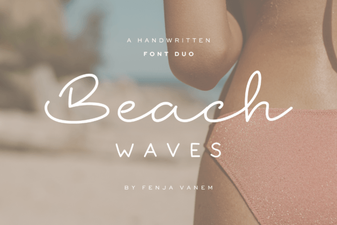 Beach Waves Duo Font for Typography Projects
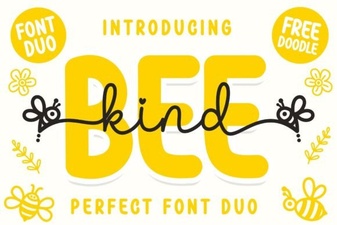 Bee Kind Duo Font: Perfect Pair for Creative Projects
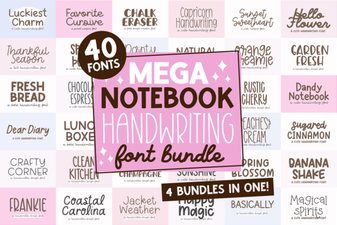 Digital Notebook Fonts for Handwriting & Creative Projects
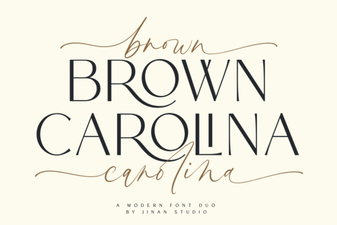 Brown Carolina Duo Font Design & Project Ideas
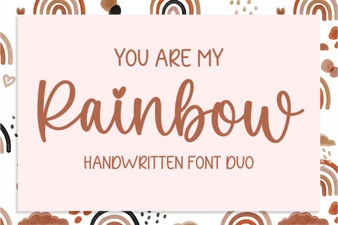 Fonts to Brighten Your Digital Projects
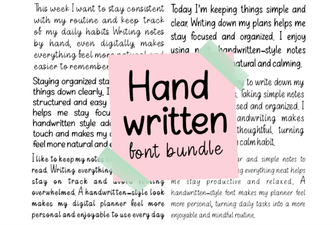 Handwritten Font Bundle for Creative Projects